 Loading…
FY28 Provost Fund Guidance
Loading…
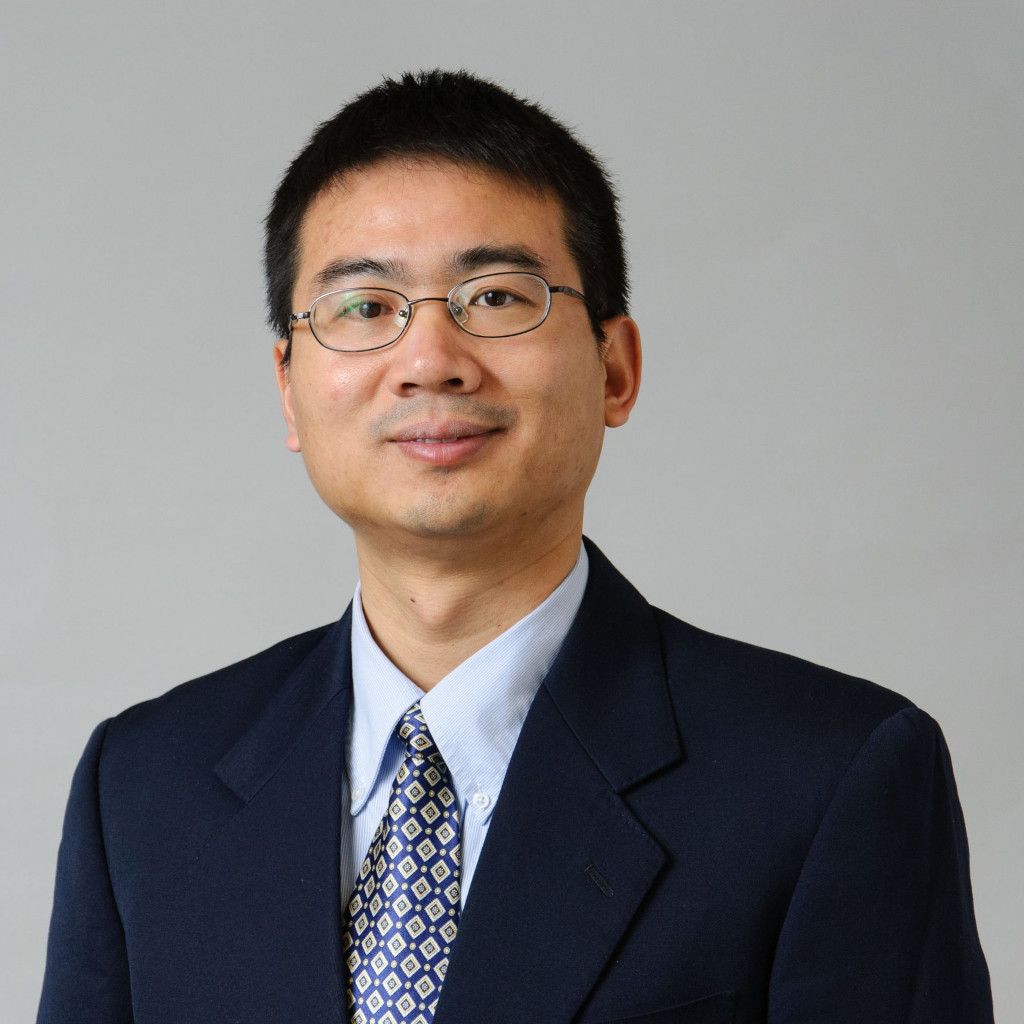
The University of Connecticut is pleased to announce that Kun Chen, Professor of Statistics, has been named Academic Director of UConn’s M.S. in Data Science program.
Chen brings to the position an exceptional record of interdisciplinary scholarship, academic leadership, teaching, and mentorship. A professor in UConn’s Department of Statistics and a research fellow in the Center for Population Health at UConn Health, his research spans statistical learning, machine learning, optimization, health data science, bioinformatics, population health, and healthcare analytics.
An internationally recognized scholar, Chen is a Fellow of the American Statistical Association and an elected member of the International Statistical Institute. In 2024, he received the College of Liberal Arts and Sciences Innovative Scholarship Award, which recognizes outstanding interdisciplinary research addressing significant challenges to knowledge, human well-being, and society. His work exemplifies the collaborative, application-focused approach that is central to UConn’s vision for data science.
As Academic Director, Chen will provide intellectual and strategic leadership for the M.S. in Data Science program. He will work across UConn’s schools and colleges to guide the program’s academic direction, strengthen its curriculum, support faculty collaboration, enhance the student experience, deepen relationships with industry and external partners, and identify new opportunities for growth and innovation.
UConn’s M.S. in Data Science is a 30-credit, career-focused graduate program offered in both an intensive, cohort-based on-campus format and a flexible online format. Drawing on faculty expertise from five schools and colleges—the College of Agriculture, Health and Natural Resources, the School of Business, the College of Engineering, the College of Liberal Arts and Sciences, and the Neag School of Education—the interdisciplinary curriculum prepares students across the full data science lifecycle, including statistical analysis, computing, machine learning, data management, visualization, communication, research design, ethics, and responsible data use. The program culminates in a team-based capstone through which students work collaboratively to address consequential, real-world challenges, often in partnership with industry and organizational collaborators.
Chen’s appointment comes at a pivotal moment for the field. As data science and artificial intelligence rapidly converge, organizations increasingly need professionals who combine advanced analytical and AI capabilities with strong statistical foundations, ethical judgment, and deep domain expertise.
Under Chen’s leadership, the program will build on its strengths in statistics, computing, machine learning, and applied problem-solving while expanding opportunities at the intersection of data science and artificial intelligence. This next phase will strengthen connections with UConn’s growing AI research and educational ecosystem, deepen industry engagement, expand the program’s national visibility, and prepare graduates to lead in a professional landscape increasingly shaped by generative AI, advanced machine learning, and intelligent decision systems. At the same time, the program will preserve the qualities that distinguish it: its interdisciplinary structure, academic rigor, commitment to responsible practice, and focus on translating technical knowledge into meaningful real-world impact.
Chen succeeds Professor Jeremy Teitelbaum, who has served as Academic Director since 2023 and is stepping down from the role. As the program’s first dedicated director following its launch, Jeremy has led the M.S. in Data Science program through a formative period of growth and development. His leadership has helped establish the program’s academic identity, strengthen its interdisciplinary partnerships, expand enrollment, and build a strong foundation for continued success. We are sincerely grateful for Jeremy’s vision, dedication, and service, and we thank him for the lasting contributions he has made to UConn’s M.S. in Data Science program.
The Board of Trustees Distinguished Professor title is awarded annually following a university-wide nomination process and a rigorous review by a faculty and student committee. Final selections are approved by the UConn Board of Trustees, which confirmed this year’s awardees at its June 25, 2025 meeting.
Dr. Luyi Sun is a globally recognized materials scientist and professor in the Department of Chemical and Biomolecular Engineering at the University of Connecticut, where he also holds a joint appointment in the Institute of Materials Science. Since joining UConn in 2013, he has led an internationally renowned research program focused on nanostructured hybrid materials for functional, environmental, and energy-related applications.
Dr. Sun’s prolific contributions to science are evidenced by over 310 peer-reviewed journal articles in high-impact publications such as Nature Communications, Science Advances, Proceedings of the National Academy of Sciences, and Advanced Materials. His work has earned more than 23,000 citations and an h-index of 83, and has been highlighted by MIT Technology Review, Smithsonian Magazine, and New Scientist, among many others. He is the inventor or co-inventor of 28 issued U.S. patents and more than 50 corresponding foreign patents, seven of which have been commercialized/licensed. The materials and devices invented in his lab have been featured in global exhibitions, including at the Material ConneXion Library in New York and the Penn Museum.
Dr. Sun is a Fellow of the National Academy of Inventors, the Royal Society of Chemistry, and the Society of Plastics Engineers. He has also been recognized with the Morand Lambla Award from the Polymer Processing Society and was elected to the Connecticut Academy of Science and Engineering.
A dedicated educator and mentor, Dr. Sun has taught rigorous and interdisciplinary courses such as Thermodynamics and Polymer Processing, and has advised dozens of Ph.D. students, M.S. students and postdoctoral researchers, and more than 160 undergraduate research assistants. His students have gone on to successful careers in academia and industry, and many have received prestigious fellowships and national honors.
Dr. Sun has also demonstrated sustained leadership in academic and professional service. As Director of the UConn Polymer Program from 2018 to 2021, he expanded faculty engagement and strengthened the program’s profile. He has held leadership roles in national scientific organizations and organized more than 80 symposia around the world. His editorial work includes serving as Associate Editor of Advanced Composites and Hybrid Materials.
Due to his outstanding record of research innovation, teaching, mentorship, and professional service, Dr. Luyi Sun strongly merits recognition as a Board of Trustees Distinguished Professor.
The Board of Trustees Distinguished Professor title is awarded annually following a university-wide nomination process and a rigorous review by a faculty and student committee. Final selections are approved by the UConn Board of Trustees, which confirmed this year’s awardees at its June 25, 2025 meeting.

Professor Anne Dailey, Associate Dean for Faculty Development and Intellectual Life and the Ellen Ash Peters Professor of Law at the University of Connecticut School of Law, is a nationally recognized scholar whose work bridges constitutional law, family law, and psychoanalytic theory. A member of the UConn faculty since 1988, Professor Dailey has made transformative contributions to legal scholarship, education, and public service, with far-reaching influence across disciplines and institutions.
She earned a Bachelor of Arts in English from Yale University and a Juris Doctor from Harvard Law School, where she served as an Articles Editor of the Harvard Law Review. Following law school, she completed a judicial clerkship with Judge José Cabranes of the U.S. District Court for the District of Connecticut. She has since become a pioneering figure in integrating psychoanalytic theory into legal analysis, most notably through her acclaimed book Law and the Unconscious: A Psychoanalytic Perspective, published by Yale University Press. This work received three prestigious honors: the Book Prize from the American Psychoanalytic Association, the Book Prize from the American Board and Academy of Psychoanalysis, and the Faculty Book Award from the UConn Humanities Institute.
Professor Dailey’s scholarship is widely cited and influential. Her co-authored articles The New Law of the Child and The New Parental Rights, and her sole authored In Loco Reipublicae, all published in top-tier law journals, have shaped the national discourse on children’s constitutional rights, state responsibility for families, and evolving family structures. She is a member of the American Law Institute and the Association for the Study of Law, Culture and Humanities.
She has held visiting faculty appointments at Yale, Harvard, and Penn Law Schools and has been named an Erikson Scholar at the Austen Riggs Center and a Fellow at the Katz Center for Advanced Judaic Studies at the University of Pennsylvania.
Professor Dailey is a dedicated and inspiring teacher of family law and constitutional law. She is also a deeply valued mentor to students and junior faculty, and her efforts have helped elevate the national profile of the UConn School of Law.
Professor Dailey’s scholarly distinction, interdisciplinary innovation, and enduring contributions to teaching and service make her a truly worthy recipient of the University of Connecticut’s highest faculty honor.

The Board of Trustees Distinguished Professor title is awarded annually following a university-wide nomination process and a rigorous review by a faculty and student committee. Final selections are approved by the UConn Board of Trustees, which confirmed this year’s awardees at its June 25, 2025 meeting.
Dr. Peter C. Albertsen is a globally respected urologic oncologist whose research and leadership have transformed the understanding and management of prostate cancer. A faculty member at UConn Health since 1987, Dr. Albertsen’s work has shaped national and international treatment guidelines and spared tens of thousands of men from unnecessary surgery and radiation.
He earned his undergraduate degree in biochemistry from Princeton University and his medical degree from Columbia University. He completed his surgical residency at Harvard and his urology training at the Brady Urological Institute at Johns Hopkins. He also holds a master’s degree in medical administration and preventive medicine from the University of Wisconsin.
Dr. Albertsen was among the first to use population-based data to challenge prevailing assumptions about PSA screening and prostate cancer aggressiveness. His landmark publications, including a seminal article in Journal of the American Medical Association (JAMA), demonstrated that many prostate cancers grow slowly and do not require immediate treatment. These findings helped launch a global shift toward active surveillance, now a widely accepted standard of care. He has played key leadership roles in major trials in both the U.S. and the U.K., including serving as Chair of the Cause of Death Committee for the PLCO and ProtecT trials.
He has authored more than 300 peer-reviewed articles and editorials, with over 17,000 citations and an h-index of 63, placing him in the top tier of urologic researchers. His research has been published in The New England Journal of Medicine, JAMA, and other leading journals, and has been supported by more than $5 million in external funding.
As UConn’s Urology Residency Program Director for over 30 years, Dr. Albertsen has trained more than 60 residents, many of whom have gone on to leadership roles in academic medicine and beyond. He is widely praised for his dynamic and discussion-based teaching style and for his long-standing mentorship of medical students and residents.
Dr. Albertsen has served in numerous leadership roles at UConn Health and nationally, including as Associate Dean for Clinical Research and Planning, Division Chief of Urology, and Trustee of the American Board of Urology. He continues to provide exceptional patient care, including to underserved and correctional populations, and is often sought out by colleagues for their own care.
His many honors include the Eugene Fuller Triennial Prostate Award and the Distinguished Contribution Award from the American Urological Association, as well as honorary membership in both the AUA and the German Urological Association. Dr. Albertsen’s research, clinical care, and mentorship have had an enduring impact on the field of urology and the lives of countless patients, making him a most deserving recipient of the University of Connecticut’s highest faculty honor.
Dear Colleagues,
As you know, the federal government is implementing significant changes to research funding priorities and allocations. In this context, we want to reaffirm our institution’s commitment to supporting faculty research, especially during the critical pre-tenure period.
First and foremost, this is not a one-size-fits-all situation. The effects of these changes on pre-tenure faculty will vary by field, funding agency, and the individual research trajectories of faculty members.
Given these variabilities, at this time, the administration is not planning to petition the Board of Trustees to implement a universal extension of the tenure clock, as we did during the Covid-19 pandemic. We are in active communication with peer institutions, and this approach is in alignment with similar institutions nationwide. Schools and Colleges are working with the Office of the Vice President for Research (OVPR) to assess the current funding landscape and will work with the Provost’s Office to identify and address any field-specific impacts on their promotion, tenure, and reappointment (PTR) processes.
We strongly encourage each faculty member to take a proactive approach in assessing how the federal funding changes may affect their research and engage in strategic planning for their tenure application as part of the PTR process.
Below are some key points that pre-tenure faculty should consider, in alignment with the OVPR guidance:
Federal agencies including the NSF, NIH, DOE, and others, are adjusting funding mechanisms, research priorities, and review processes. The OVPR has been providing briefings and resources to help faculty navigate these changes and has established four task forces to help the university community understand and respond to these changes effectively. If you are interested in joining a taskforce, please contact Matt Mroz (matthew.mroz@uconn.edu).
Given potential shifts in federal allocations of research funding, it is prudent to explore alternative funding sources, including:
While maintaining scholarly identity is paramount, faculty should consider how their research can intersect with emerging federal priorities such as AI, quantum, and data science; biotechnology and health sciences with a focus on chronic disease; and national security. Adjustments in framing or collaboration may increase funding potential.
Pre-tenure faculty should draw on their department head, senior colleagues, dean and associate deans, center/institute directors, and the OVPR as essential resources. Regular conversations about tenure expectations, funding realities, and evolving research trajectories can help faculty make informed decisions about their scholarly path.
The OVPR offers many resources to support faculty in this work, including proposal development assistance (e.g., proposal coordination, writing, editing, review), grant-writing workshops, and communication resources.
Please know that the guidance for associate professors working toward their promotion to full professor is much the same, since they may face similar challenges in this funding landscape. Associate professors often have access to greater resources—such as unrestricted fund accounts, well-equipped labs, and extensive professional networks—that can help them navigate a shifting funding landscape. They should be intentional about leveraging these assets to sustain their research productivity. Associate professors should discuss their individual timeline for promotion with their department head or dean since the promotion timeline for associate professors is more flexible than the tenure timeline.
And a note to full professors: While you, too, may be facing similar funding challenges, your leadership and experience are especially valuable during this time—serving as a critical resource for colleagues, department heads, deans, and the OVPR. We are grateful for the numerous instances of mentorship and support that we have already seen senior faculty offer their more junior colleagues. Please remember that a sympathetic ear, a bit of sound advice, or a problem-solving brainstorm session can make an enormous difference alongside institutional supports.
Faculty who have questions or need guidance tailored to their specific circumstances should not hesitate to reach out to the OVPR regarding research and their department head, dean, and/or the Provost’s Office regarding the PTR process and expectations.
Please remember that if you encounter funding-related roadblocks or receive notification of changes to a federal research grant that you have already been awarded, you should reach out immediately to OVPR (research@uconn.edu) to explore available support mechanisms. The OVPR website provides essential guidance regarding the steps you need to take.
Although the funding landscape is evolving, we want to emphasize to all faculty that you are not navigating these challenges alone. We remain steadfast in our commitment to supporting your research productivity and professional success at every stage of your career.
This is certainly a time of extraordinary change that is testing our researchers, but our strong sense of community and commitment to UConn’s mission as a flagship Land and Sea Grant institution will see us through these challenging times, as they have in difficult times before. We are grateful every day to work with such outstanding colleagues.
Sincerely,
Anne D’Alleva, Ph.D.
Provost & Executive Vice President for Academic Affairs
Pamir Alpay, Ph.D.
Vice President for Research, Entrepreneurship, and Innovation
Test

 Reload document
  Open in new tab